Higher Education, Government of Gujarat
Skip to content Screen reader access
National Task ForceStudent Mental Health & Well-being
Loading, please wait.
A Supreme Court of India initiative

Building safer, more supportive campuses for every student.

The National Task Force addresses student mental health concerns and works with higher educational institutions to prevent suicide through listening, evidence and action.

Your report is handled through the official secure portal.

Mental health support

Tele-MANAS

Comprehensive mental health care and counselling support whenever you need it.

Counsellors available 24/7 Tap a number to connect with a trained counsellor.
Participate in meaningful change

Get involved. Your voice matters.

Students experience campus life differently. By sharing what works, what is missing and where support breaks down, you help the Task Force recommend practical safeguards for higher educational institutions.

Who can participate?

Every perspective strengthens the response.

We welcome insights from everyone who contributes to student well-being and campus life.

Students Parents Faculty Mental-health professionals Institutions

How your voice creates change

  1. 01
    Listen

    Understand lived experiences, warning signs and gaps in campus support.

  2. 02
    Review

    Study current regulations, institutional practices and systemic challenges.

  3. 03
    Recommend

    Turn evidence into practical safeguards, awareness and support systems.

A safer academic ecosystem starts with listening. Together, we can make campuses more compassionate, responsive and mentally resilient.

Our collective progress

Support systems growing across institutions

A concise view of institutional participation, awareness initiatives and student-support capacity.

906

Task Force Cells Established

25

Training & Awareness Programs

1050

Registered Counsellors

900

Cases Supported / Managed

Programme indicators provide a high-level view of implementation reach.
Explore the monitoring dashboard
National Task Force

latest News & Incidents!

Explore the latest updates, policy insights, seminars, and key recommendations focused on student well-being, inclusion, institutional accountability, and suicide prevention across Higher Education Institutions.

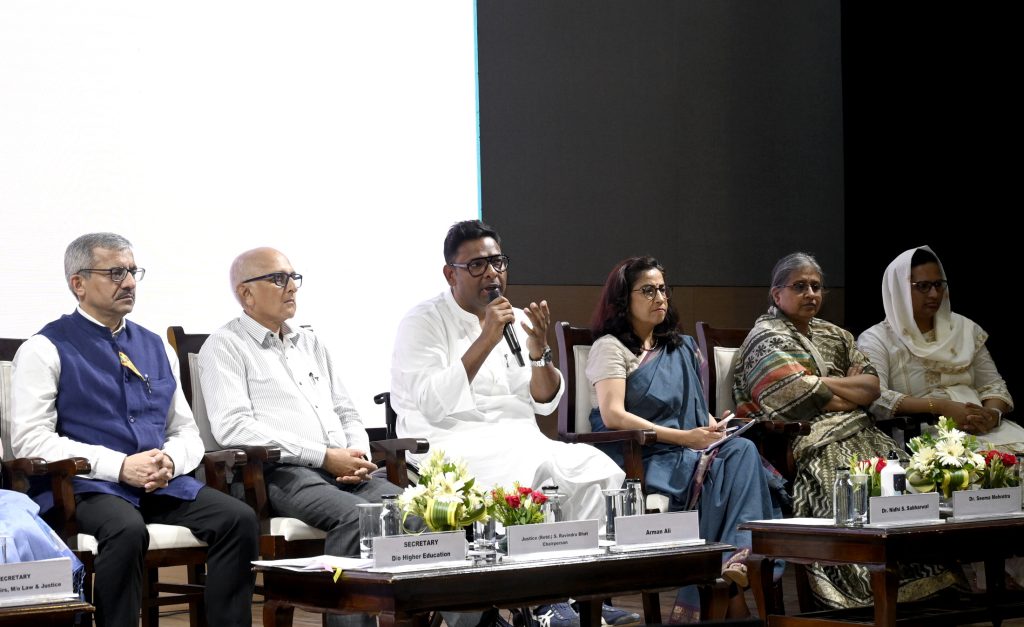
National Task Force press meet and website launch at Kaushal Bhawan, New Delhi Official event Watch event video
National Task ForcePress Meet · New Delhi
Official announcement

Press Meet & Website Launch

A new national digital platform supporting transparency, accessibility and coordinated action for student mental health across higher educational institutions.

Date
8 August 2025
Time
2:00 PM onwards
Venue
Kaushal Bhawan, New Delhi

The National Task Force—appointed by the Supreme Court of India to address student mental-health concerns and prevent suicides—introduced its newly developed public website at an official press meet.

The platform provides structured information, accessible communication channels and a clearer way for institutions and communities to engage with the Task Force.

More transparentClear public information and updates
More accessibleInclusive access across devices
Better connectedCoordinated institutional engagement
Immediate implementation priorities

Actionable Points for Implementation

Three immediate priorities to strengthen professional support, emergency readiness and responsible evidence management across higher educational institutions.

For universities, colleges and regulatory bodies
04–10 Continue the institutional roadmapSystem-strengthening priorities Explore all seven priorities
Track institutional readiness and progressView programme reach, support capacity and implementation indicators.
Open dashboard
Illustrative perspectives

Support systems seen through different voices

Sample testimonials showing how clear, accessible and coordinated support can be experienced across the campus community.

Placeholder copy for design preview

I felt more confident asking for help when the counselling process, privacy expectations and emergency contacts were explained clearly in one place.

Student perspectiveHelp-seeking and confidential support

Knowing the warning signs and whom to contact helped me support my child calmly instead of reacting with fear or judgment.

Parent perspectiveAwareness and early support

The referral guidance gave me a practical way to begin a supportive conversation while staying within my role as a faculty member.

Faculty perspectiveRecognition and responsible referral

A shared roadmap makes it easier to connect committees, services, reporting responsibilities and leadership review around student well-being.

NTF nodal officer perspectiveInstitutional coordination and monitoring